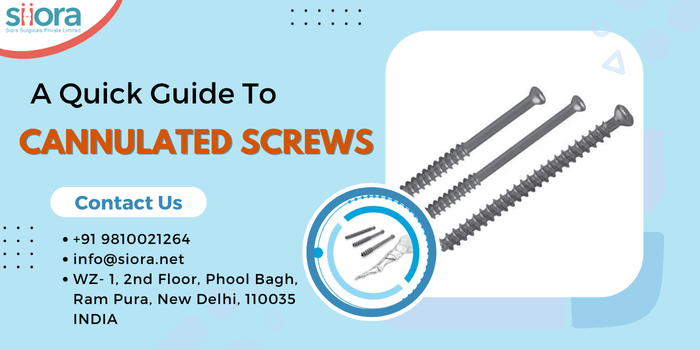
For minor bone fractures, a traditional cast is often sufficient. However, many fractures, particularly complex ones, necessitate surgery. The type of implant used in fracture surgery varies based on the fracture’s nature and severity. One of the implants that is required in various surgeries is Herbert cannulated screws. These tiny screws play a vital role in bone repair, offering a minimally invasive and precise way to put fractured bones back together.
So, what exactly are cannulated screws, and how do they work? Let us have a quick look at them.
The Design of Cannulated Screws
Imagine a simple screw, a solid metal cylinder with a spiral groove running along its length. Now, picture a hollowed-out version of that screw, with a central tube running through its core. That’s the basic idea behind a cannulated compression screw. This hollow center is called the cannulation. This is what makes them unique.
The cannulation serves two key purposes. Firstly, it allows the screw to be inserted over a thin guide pin. This guide pin is first drilled into the bone fragment, ensuring precise placement. Then, the cannulated screw, which is narrower than the final hole created by the guide pin, slides over the pin and into the desired position within the bone.
Secondly, the cannulation allows surgeons to drill the final screw hole using the screw itself as a guide. This minimizes the amount of drilling required in healthy bone, reducing potential damage and promoting faster healing.
What Are the Different Types of Cannulated Screws?
Not all fractures are equal and neither are cannulated screws. These miniature implants are designed to address a variety of bone repair challenges. Here’s a look at the two main categories:
Cortical Screws: These are ideal for fractures involving the denser outer layer of bone, called the cortex. They have threads along their entire length, providing a strong grip within the cortical bone.
Cancellous Screws: Designed for spongier bone regions called cancellous bone, these screws typically have threads only on the tip. This design allows for secure fixation within the cancellous bone without disrupting its delicate structure.
What Are the Uses of Cannulated Screws?
While fracture repair is a primary role for cannulated screws, their applications extend beyond broken bones. They play a vital role in various orthopedic procedures, including:
Fusion: They help permanently join bones together, such as in spinal fusions.
Osteotomies: Precisely cutting bones for realignment procedures to correct bone deformities.
Securing Implants: Providing additional stability for artificial joint replacements or other implants.
What Are the Advantages of Cannulated Screws?
Compared to traditional fixation methods like orthopedic plates and rods, cannulated screws offer several advantages:
Minimally Invasive: Smaller incisions result in minimal tissue damage, leading to faster recovery and reduced post-operative discomfort.
Precise Placement: The guide pin and cannulation ensure accurate screw positioning, which is crucial for optimal bone healing.
Versatility: Different screw types cater to various bone structures and repair needs.
Strong Fixation: Cannulated screws provide robust support for healing bones.
Siora Surgicals Pvt. Ltd. is a leading manufacturer and supplier of a CE-certified range of orthopedic trauma implants including cannulated screws. With a strong worldwide presence, the company serves around 130 national and international distributors and orthopedic surgeons. Siora is also looking for trustworthy distributors of Orthopedic devices in USA for supplying an international standard range of orthopedic implants and instruments.
 Site Title
Leave a comment