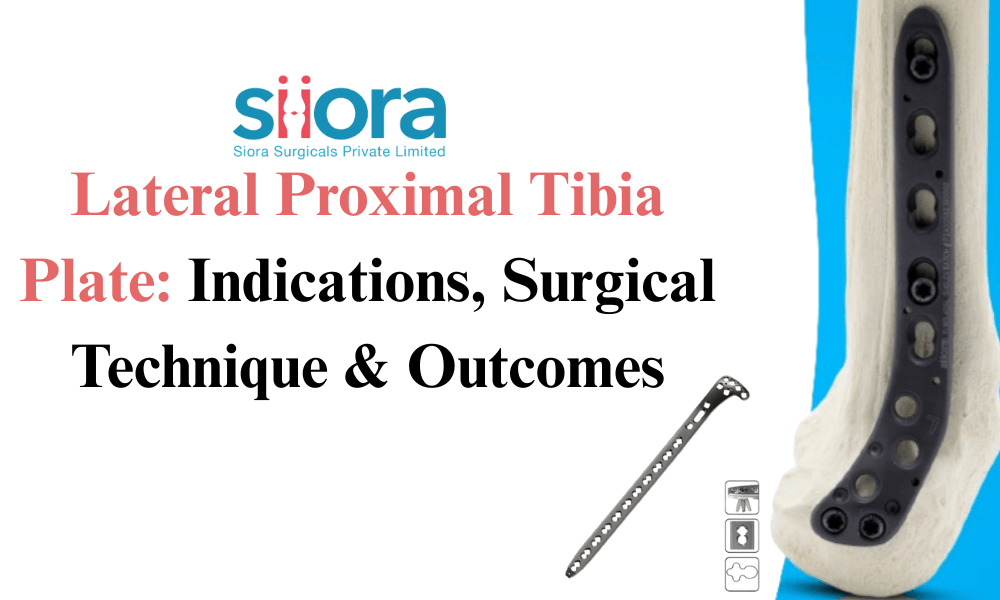
The lateral proximal tibia plate has become an essential orthopedic implant in the treatment of complex fractures near the knee joint, specifically on the lateral side of the upper tibia. Known for its stability and anatomical contouring, this plate plays a pivotal role in fracture fixation, particularly when dealing with periarticular or comminuted fractures. But beyond its biomechanical strength, the implant is also a testament to the evolution of orthopedic care, designed not just to fix bones but to restore mobility, minimize complications, and improve patient outcomes.
What Are the Indications of Lateral Proximal Tibia Plate?
So, when does a surgeon reach for the lateral proximal tibia plate? Broadly, it is indicated in:
- Lateral tibial plateau fractures (Schatzker Types I-VI)
- Periprosthetic fractures involving the tibia
- Fractures extending into the metaphyseal-diaphyseal junction
- Complex intra-articular injuries
- Cases with osteoporotic bone where angular stability is essential
One of the primary reasons this plate is preferred is due to its locking screw technology, which offers added fixation, particularly in bones with poor quality or comminution. It allows the surgeon to maintain the anatomy of the tibial plateau while offering rigid internal support.
Surgical Technique – A Balance of Precision and Preservation
Performing a lateral proximal tibia plating procedure is not just about placing metal on bone. It’s a meticulous surgical process involving reduction, alignment, and biomechanical planning.
Step-by-step breakdown
- Patient Positioning: The patient is placed supine on a radiolucent table, with the injured leg slightly flexed to ease access and visualization.
- Approach: A lateral incision is made, typically using an anterolateral approach. Great care is taken to preserve the soft tissue, especially around the patellar tendon and surrounding neurovascular structures.
- Fracture Reduction: Fracture fragments are first realigned anatomically, often using reduction clamps or joystick techniques. Articular congruity is crucial to minimize post-operative arthritis risks.
- Plate Positioning: The pre-contoured lateral plate is placed on the lateral aspect of the tibia, ensuring it fits flush without impinging on surrounding structures. Fluoroscopic guidance helps verify alignment and positioning.
- Fixation: Locking screws are inserted proximally to stabilize the articular block, followed by distal fixation into the diaphysis. The combination of cortical and locking screws allows for a hybrid construct, optimizing stability.
- Closure: After confirming proper fixation and alignment on fluoroscopy, the wound is closed in layers with attention to soft tissue handling.
Post-Operative Care and Outcomes
Recovery doesn’t stop in the operating room. Post-operative protocols play a huge role in final outcomes. Typically, partial weight-bearing is initiated in the early weeks, with gradual progression depending on fracture healing and patient tolerance.
Outcomes for lateral proximal tibia plating have been encouraging:
- Most patients regain near-normal knee function with proper rehab.
- The risk of malalignment or implant failure is significantly reduced when the procedure is done correctly.
- Early motion helps prevent stiffness and improves muscle recovery.
Of course, like all surgical procedures, there are potential complications. These may include infection, hardware irritation, or, in rare cases, non-union. However, when performed with precision and followed by good rehabilitation, patients often return to their daily activities with little to no functional deficit.
A Step Toward Functional Recovery
In essence, the lateral proximal tibia plate is more than just a piece of metal; it’s a bridge to mobility and independence for many trauma patients. Its anatomical design, when paired with a sound surgical technique, offers a reliable solution to complex tibial injuries. As orthopedic technology continues to advance, orthopedic implants like this continue to exemplify the intersection of engineering and compassionate patient care.
 Site Title